

AI Receptionist vs Answering Service for Clinics: Which One Actually Books the Appointment?
A clinic-specific breakdown of AI receptionists vs traditional answering services and in-house front desks — booking accuracy, after-hours coverage, cost, and where each one falls short.
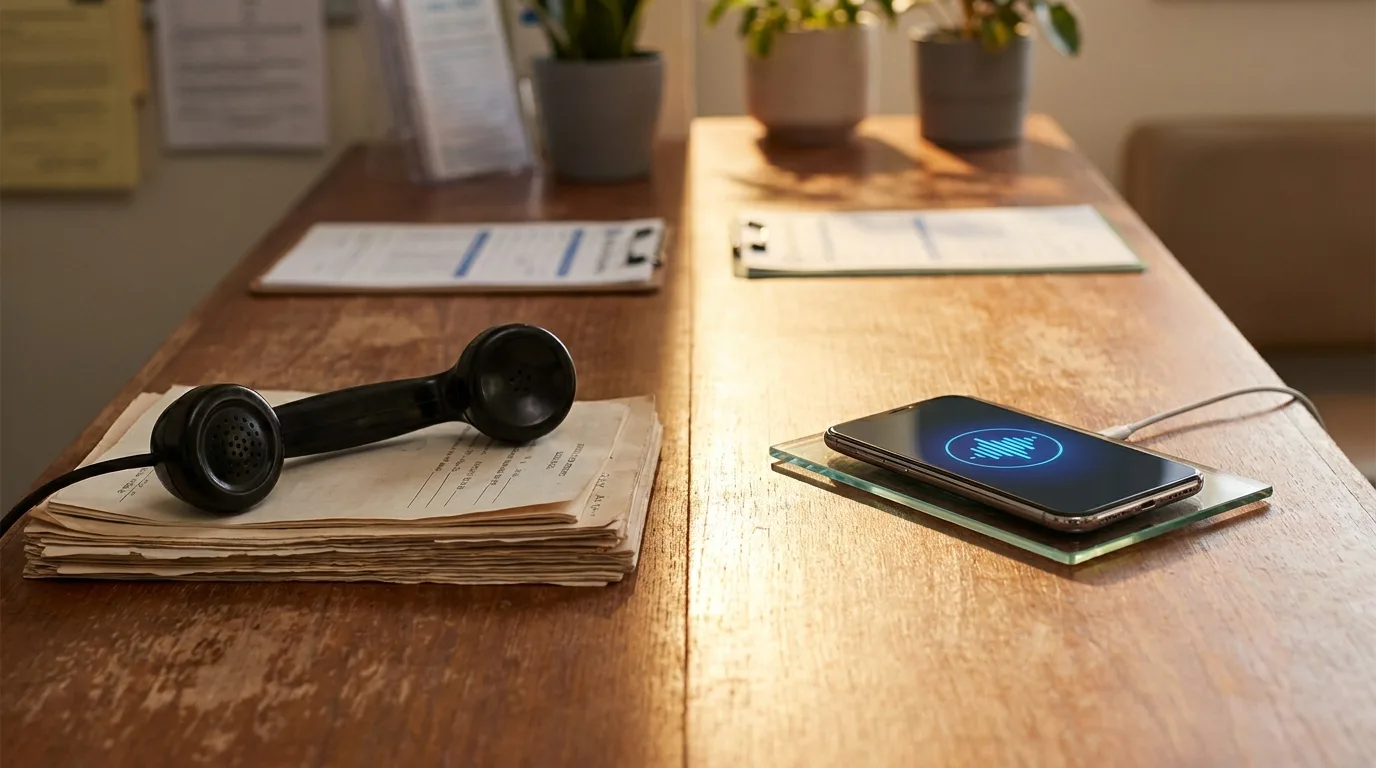
Short answer: for booking an appointment specifically, an AI receptionist outperforms a traditional answering service, because it can see your real calendar and book the slot on the call instead of taking a message. Here’s the full comparison, including where each option genuinely wins.
The three options, side by side
In-house front desk. Best for in-person patients standing in front of it and for anything that needs a human’s clinical judgment on the spot. Falls short the moment a call comes in while your desk is mid-conversation, on a lunch break, or after the office closes — which for most clinics is a meaningful share of total call volume.
Human answering service. A live person picks up when your desk can’t, which is a real improvement over voicemail. But they’re working from a script, usually without access to your actual calendar, so they take a message rather than book a slot. You still have to call the patient back to confirm a time, and that gap is where patients with options move on to whoever answers next.
AI receptionist. Answers in seconds, every time, checks your real availability, and books the appointment directly on the call. It handles the predictable 80% — new patient intake, rescheduling, “are you taking new patients,” insurance and direct-billing questions — and transfers anything urgent or ambiguous straight to a human with a summary, rather than guessing.
Where AI wins clearly
After-hours and overflow. The calls that would otherwise ring out or go to voicemail get answered and often booked before your desk even opens the next morning.
Consistency. It doesn’t have an off day, doesn’t forget to mention your accepted insurance plans, and gives the same accurate information on the hundredth call as the first.
Cost at scale. A flat monthly retainer that doesn’t grow per call, versus a per-minute or per-call answering service bill that climbs with your busiest months — exactly when you can least afford surprises.
Where a human still matters
Clinical judgment calls, distressed callers, and complex situations that need genuine empathy and discretion still belong with a person. The right setup routes those calls to a human immediately rather than trying to have the AI handle everything — a good agent knows the edge of its lane and hands off instead of guessing.
The setup most clinics actually run
Not “AI replaces the front desk” — a front desk plus an AI receptionist that catches everything the desk physically can’t: after 5pm, during lunch, on the phone with another patient, and every call outside business hours. The desk keeps doing what it does best; the AI stops the leak.
Full detail on how this works for clinics specifically is on the AI receptionist page, delivered through ZeroMiss, our phone-answering division. If cost is the open question, we broke down the real numbers in How Much Does an AI Receptionist Cost for a Medical or Dental Clinic in BC?
Written by Jazz Grewal, who builds these systems for BC service businesses.